
Skip to content
Training programs

Licenses, ratings & endorsements

TWO2FLY AVIATION is a Part 61 flight school based at Pearland Regional Airport (KLVJ) in Pearland, Texas, training Sport, Private, Instrument, Commercial and CFI candidates across the south and southeast Houston metro. Full-time and part-time instructors mean students pick a schedule that fits their life, and Gulf Coast weather keeps the airplanes flying year-round.

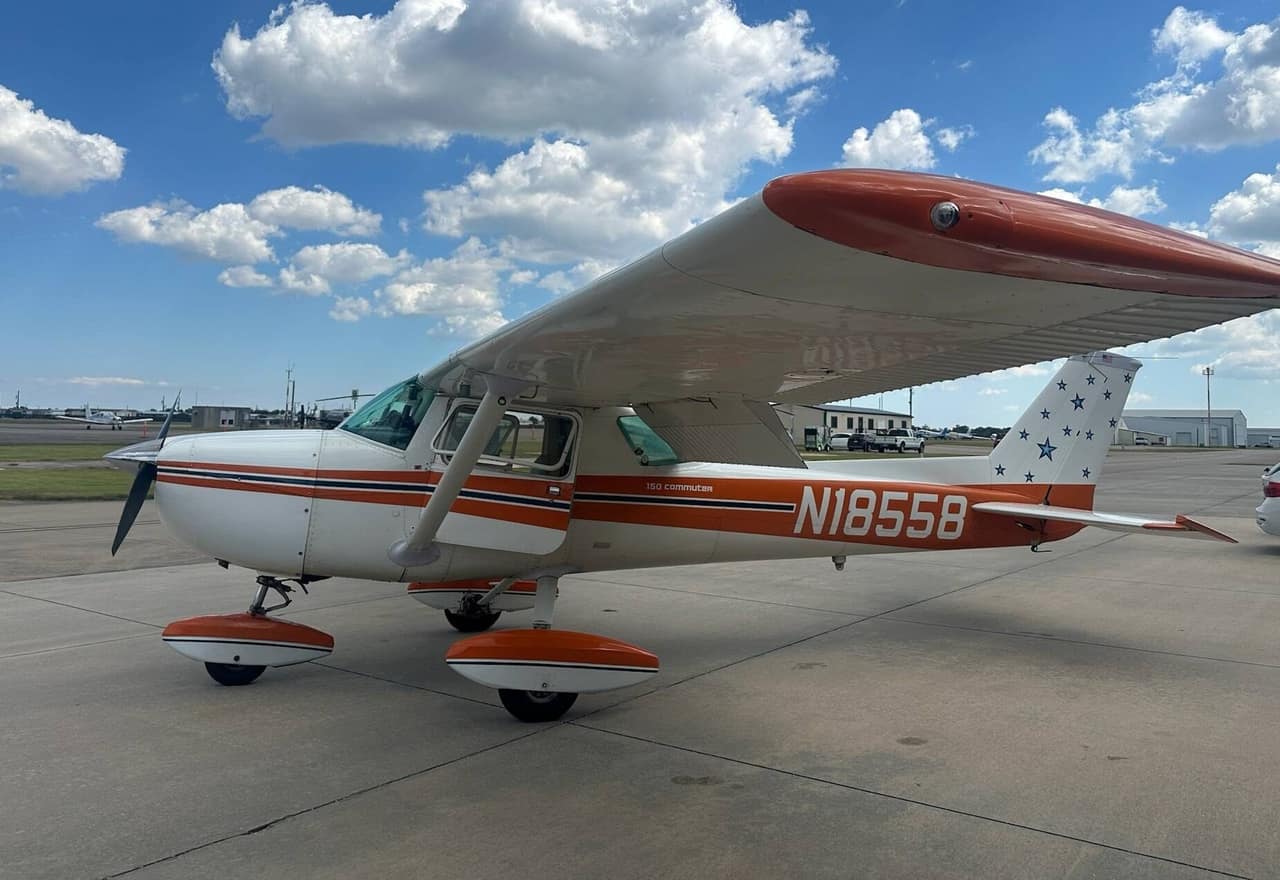
  1. Cessna 150L N18558 in orange and white parked on the ramp beneath a bank of cumulus.
    01 / 07 Lowest-cost entry · no FAA medical

    Sport Pilot Certificate

    MOSAIC replaced the old weight limits with performance-based criteria, so sport pilots can now fly a wider range of aircraft — including four-seat types like the Cessna 172 and the Piper Cherokee.

    No FAA medical certificate is required, and the certification requirements are reduced compared with the Private Pilot certificate.

    This is the pathway for a lower-cost entry into aviation when you are flying for yourself rather than building toward a career — the Professional Pilot Pathway is the route for that.
    Map my path to Sport Pilot Certificate →
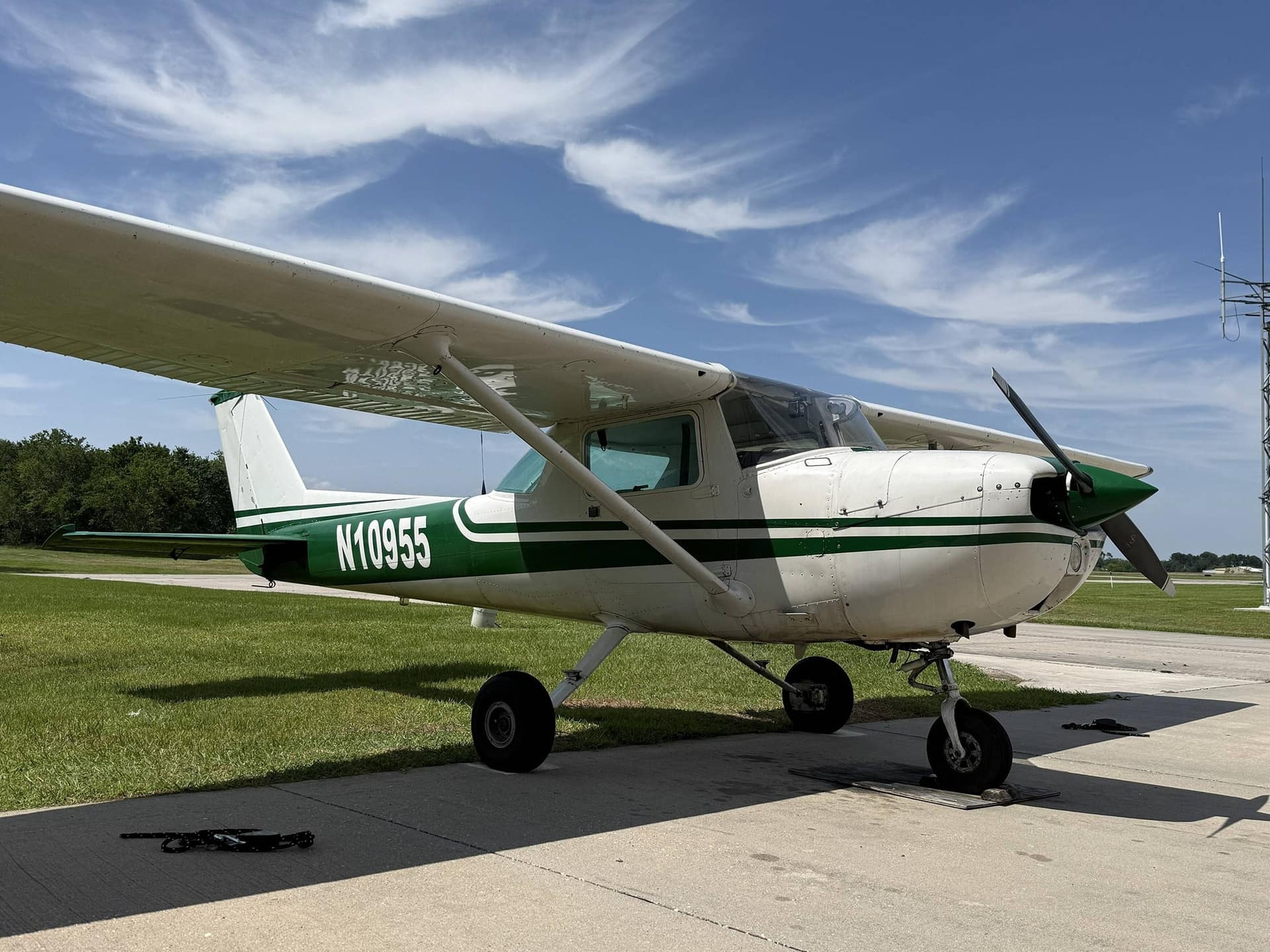
  2. Cessna 150L N10955 in green and white parked on a concrete pad beside cut grass on a clear day.
    02 / 07
    ▸ Start here

    Private Pilot License

    You train toward the Private Pilot certificate in single-engine airplanes: the freedom to fly day or night, carry multiple passengers, pursue additional ratings and fly a wider range of aircraft.

    Instruction is $65 per hour, ground or flight, and the Cessna 150L trainers rent at $135 per hour including fuel — so you pay lesson by lesson rather than for a package up front.

    Start with a Discovery Flight: one flight, one instructor, and it counts in your logbook toward the certificate.

  3. City lights spread out below the wing strut on a night flight.
    03 / 07 All-weather precision

    Instrument Rating (IFR)

    Instrument students fly N98492, the 1985 Cessna 172P Skyhawk II: IFR certified, standard six-pack, Garmin 530W, at $174 per hour including fuel.

    The rating is the middle leg of the Professional Pilot Pathway, which runs Private → Instrument → Commercial as one continuous plan.

    Already rated and out of currency? Instrument Proficiency Checks are available à la carte at the $65 per hour instruction rate.

    Map my path to Instrument Rating (IFR) →
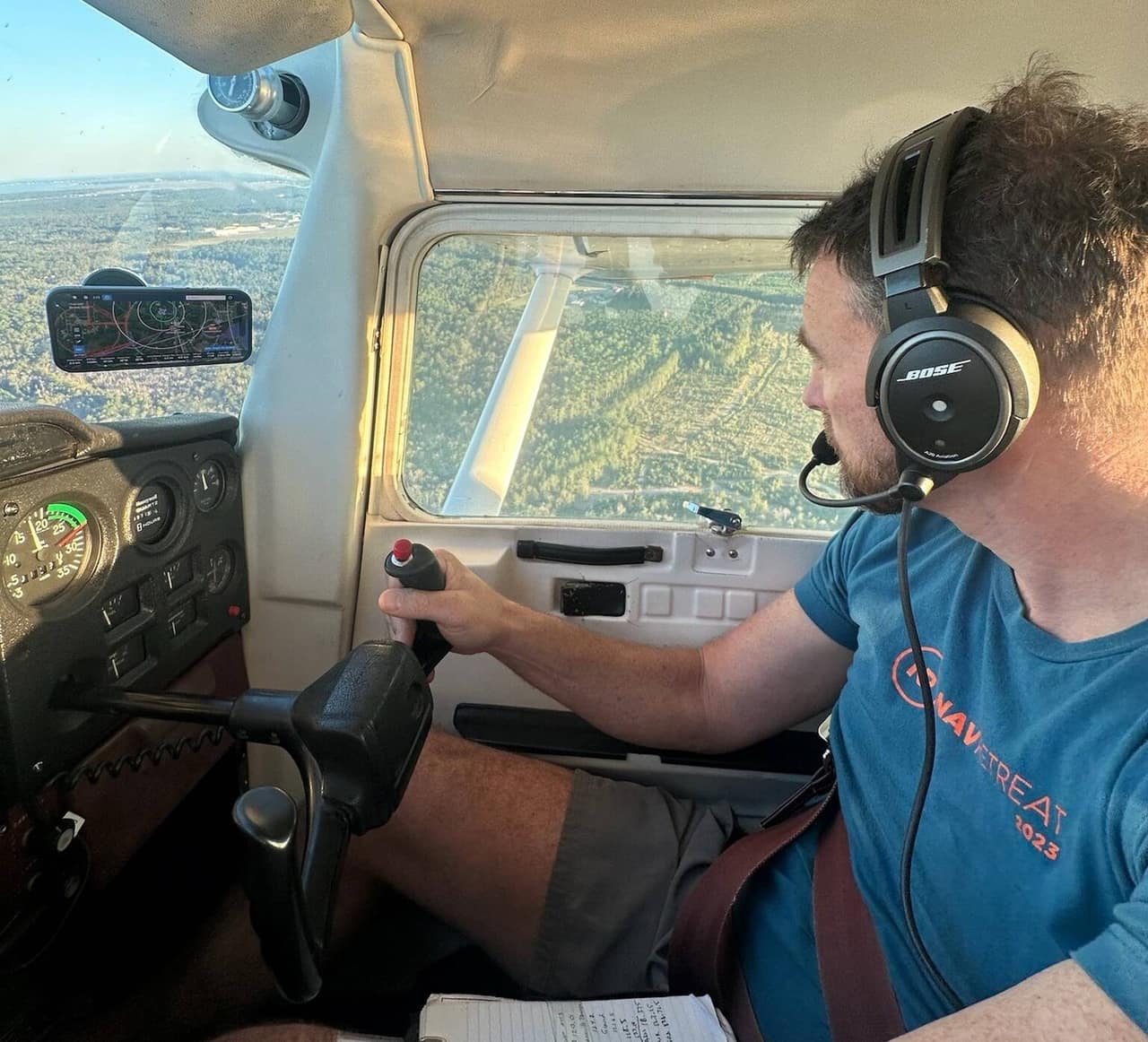
  4. A pilot in a headset flying from the left seat, one hand on the yoke and a moving map clipped to the window post.
    04 / 07 Fly for a career

    Commercial Pilot License (CPL)

    The Professional Pilot Pathway includes Private Pilot certification with an instrument rating and the transition to the Commercial Pilot certificate, where you can earn a living as an aviator.

    Whether you are pursuing the airlines, charter, corporate flying or another professional goal, the pathway is built to place you safely on the correct track.

    The Cessna 150L trainers, the 172P and the 182P are all approved for Commercial Pilot course work, so you build time across the fleet you already know.

    Map my path to Commercial Pilot License (CPL) →
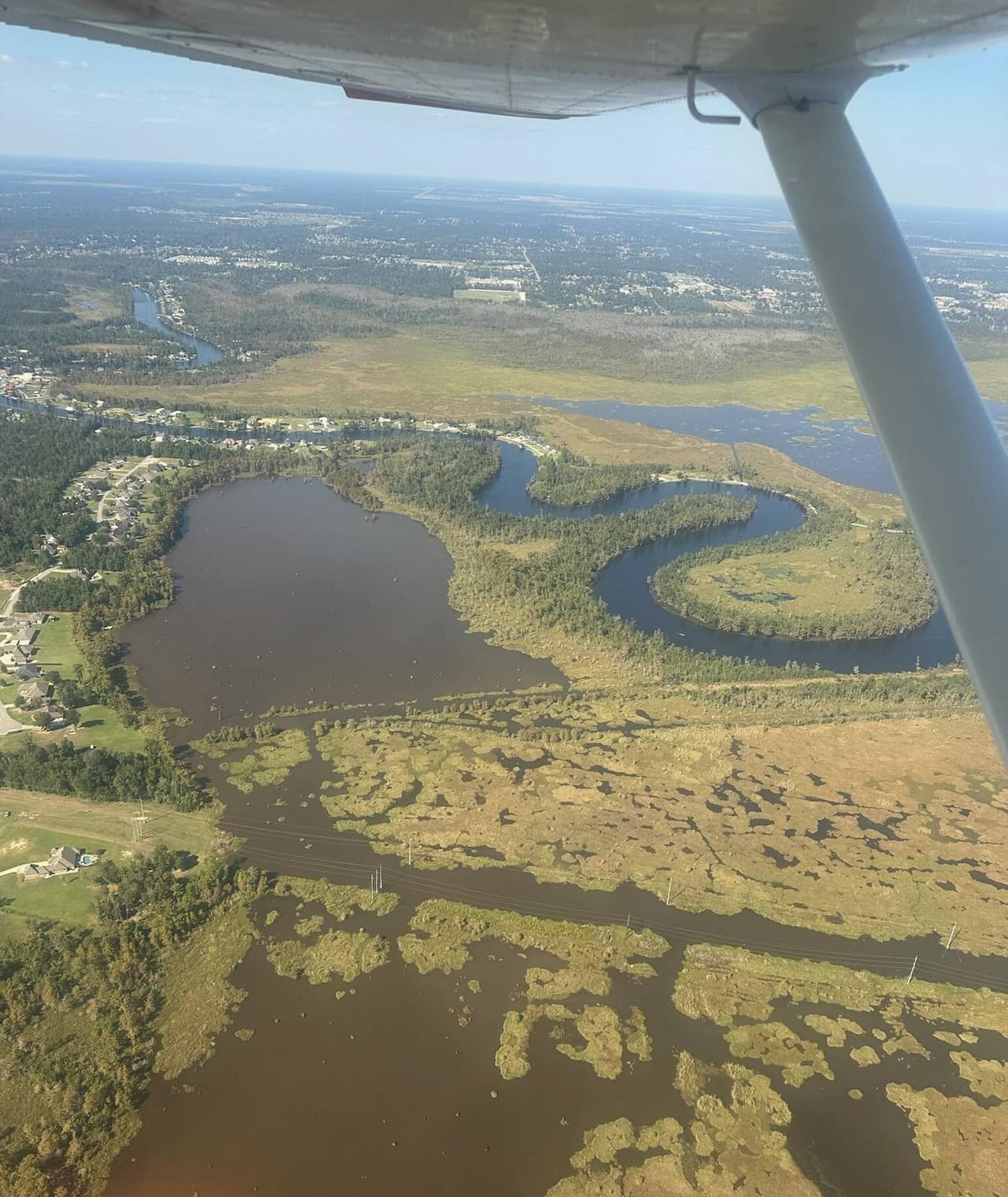
  5. The view from beneath a high wing over winding bayous, lakes and waterfront neighbourhoods.
    05 / 07 Coming October 2026

    Multi-Engine Add-On

    The program is not yet running — TWO2FLY AVIATION has it scheduled to open in October 2026. Ask us to put you on the list.

    When it opens it will cover VMC awareness, engine-out procedures, advanced systems and practical test preparation, taught by instructors who specialise in multi-engine operations.

    Two of the school’s instructors already hold MEI certificates, so the instructional depth is in the building ahead of the airplane.

    Map my path to Multi-Engine Add-On →
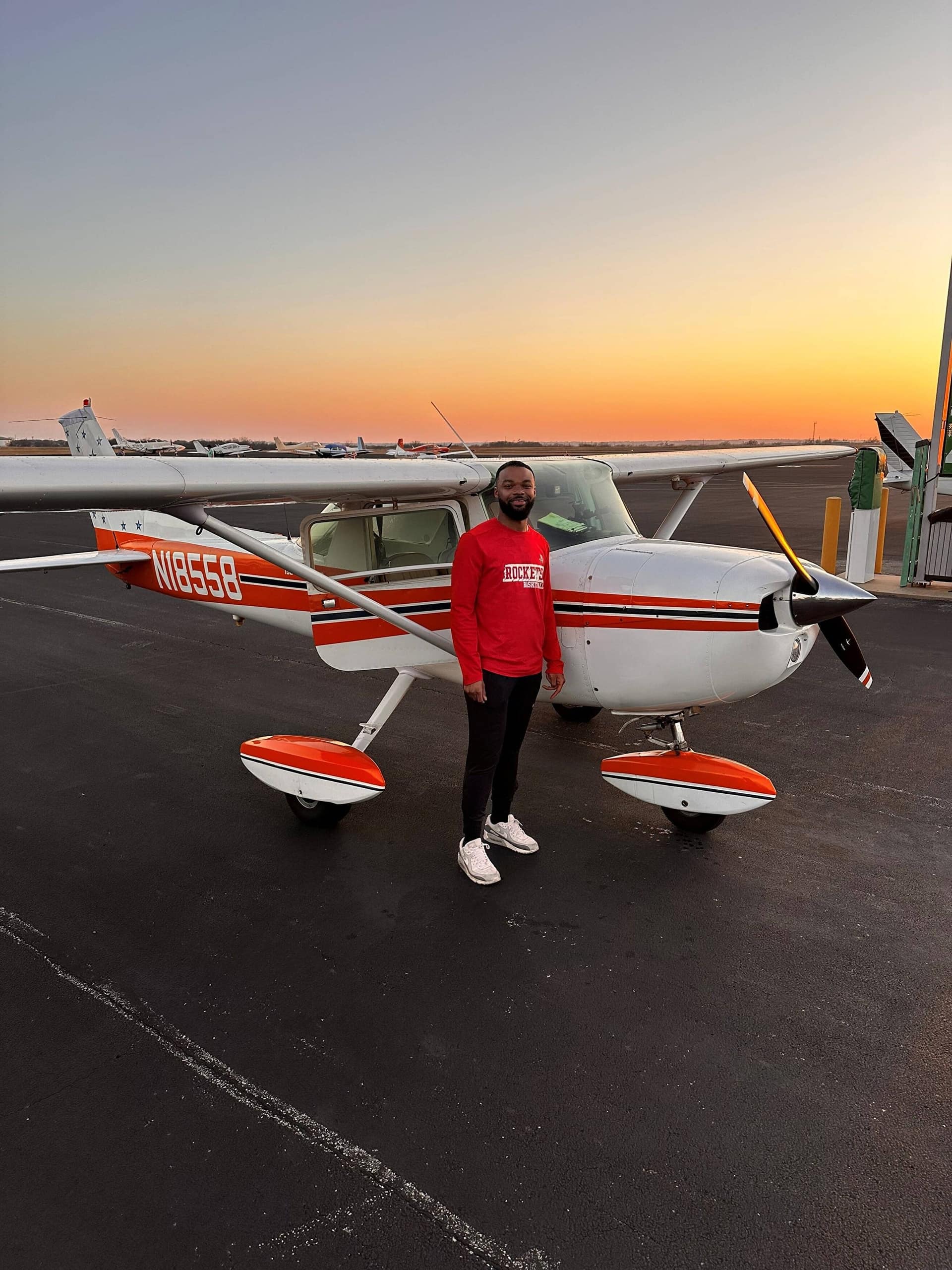
  6. A man in a red sweatshirt standing at the wing of Cessna 150L N18558 on the ramp at sunset.
    06 / 07 Teach what you fly

    Flight Instructor (CFI/CFII)

    Training emphasises real-world teaching skills, scenario-based decision-making and mastery of the fundamentals that matter in the right seat.

    From lesson planning and endorsements to maneuvers, the FOI and practical test readiness, the program walks every step with structure and repetition.

    It suits both the pilot advancing an aviation career and the pilot preparing to mentor the next generation.

    Map my path to Flight Instructor (CFI/CFII) →
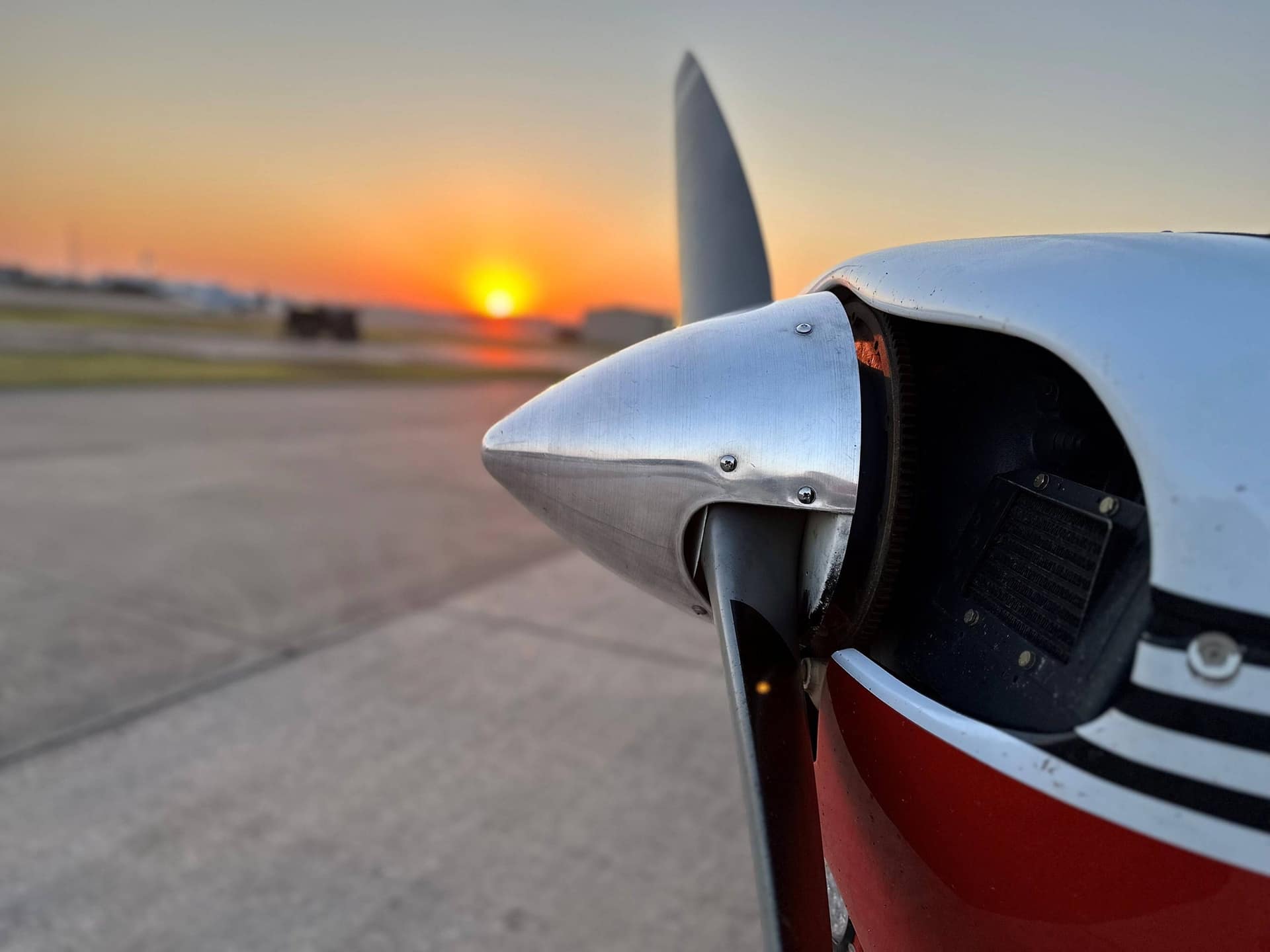
  7. The polished spinner and one propeller blade of a parked aeroplane in close-up, the sun setting over the field behind.
    07 / 07 Sharpen the fundamentals

    Endorsements & Add-ons

    Flight Review to stay current and proficient, and Instrument Proficiency Checks to keep an instrument rating usable.

    Complex endorsement — pilot-in-command of an airplane with a constant-speed propeller and retractable gear. High-performance endorsement — an engine with more than 200 HP, flown in the school’s 230 HP Cessna 182P.

    Everything on this list bills at $65 per hour of instruction plus the aircraft rate for whichever airplane the work calls for.

    Map my path to Endorsements & Add-ons →
  8. From first flight to a professional career — we train the whole path.

How it works

Training built around you

Instruction is $65 an hour and the two-seat trainers rent at $135 an hour with fuel included, so a typical training hour lands around $200 — paid lesson by lesson, never up front.

Training questions, answered

Do I need any previous experience to start?
No. Every student here starts with no flight experience and no aviation background — that is what the first lesson is for. Your instructor flies with you from the very first hour, and nothing is assumed.
Is it safe?
Yes — and the reason is that nothing about a training flight is left to chance. The airplanes are older airframes that are well maintained, with very little downtime; your instructor sits at a full second set of controls and can take the airplane at any moment; and if the weather is not right for the lesson, the lesson moves. Nobody here flies a student into conditions they should not be in.
How long does it take to get my license?
Under Part 61 the FAA sets a minimum of 40 flight hours for a Private Pilot certificate, and most people need more than the minimum. The bigger variable is frequency — students who fly two or three times a week finish in months, while students who fly once a fortnight spend part of every lesson re-learning the last one. Gulf Coast weather here allows year-round flying, which removes one of the usual delays.
Do I need a medical certificate?
For a Private Pilot certificate, yes — you will need at least an FAA third-class medical (or BasicMed once you qualify) before you can solo. The Sport Pilot Pathway requires no FAA medical at all, which is one reason it is the lower-cost entry into aviation. You do not need any of it in place to fly a Discovery Flight.
What aircraft will I train in?
Most primary students fly one of the two Cessna 150L Commuters, N10955 and N18558. Instrument students move to N98492, the IFR-certified Cessna 172P Skyhawk II with a Garmin 530W, and high-performance endorsement work is done in N85936, the 230 HP Cessna 182P Skylane.
Are you a Part 61 or Part 141 school?
TWO2FLY AVIATION is a Part 61 school. That means the syllabus flexes around you rather than around a term calendar — your instructor builds the plan to your pace, your background and your goals, which is what makes training here workable alongside a job.
Can flight training be a career?
Yes — the Professional Pilot Pathway exists for exactly that. It runs Private Pilot, then the instrument rating, then the transition to the Commercial Pilot certificate, at which point you can be paid to fly. Many pilots then add the CFI certificate through the school’s CFI Academy and build hours by teaching.
How do I get started?
Send us a message or text (281) 702-1752 and tell us roughly when you can fly. From there almost everybody starts the same way — with a Discovery Flight, which is one real lesson with an instructor and no obligation after it.
Will I train in the same airplane every lesson?
Usually, for primary training — most students settle into one of the two Cessna 150Ls. You will change airplanes when the training changes: instrument work moves to the IFR-certified Cessna 172P, and the high-performance endorsement is done in the Cessna 182P.

Not sure where to start?

Call us and we'll talk it through — where you are, where you want to go, and what it takes to get there, numbers included.

Get My Flight Plan Book — $200/hr